
Album and Story: Rhoda Henry Messner 1902-1985
A Time to Remember – by Rhoda Henry Messner 1902-1985
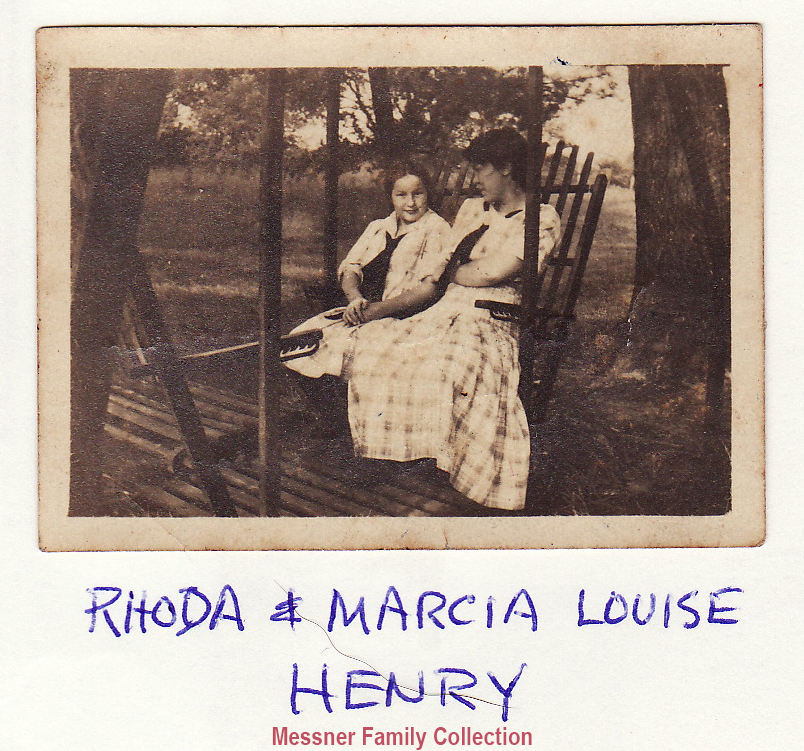
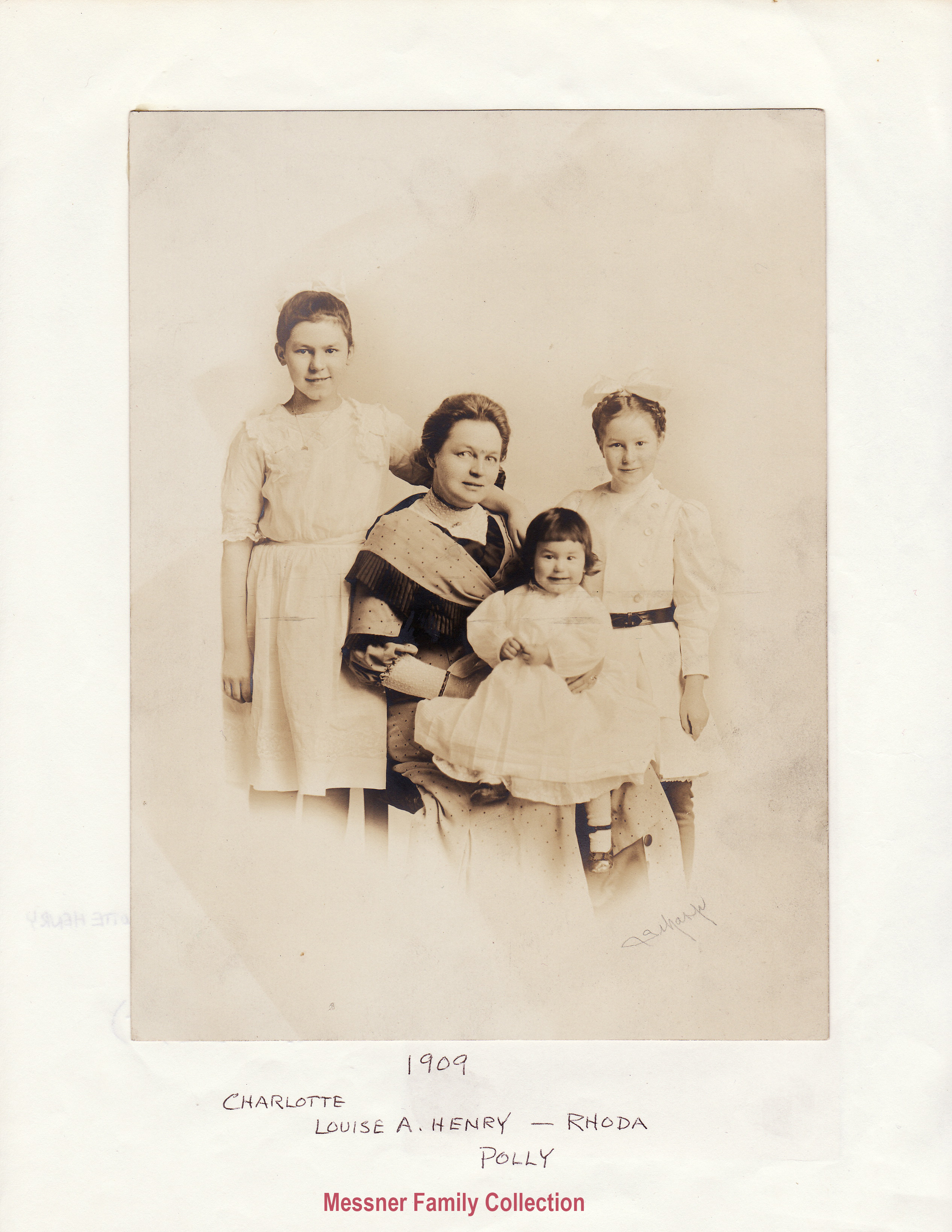
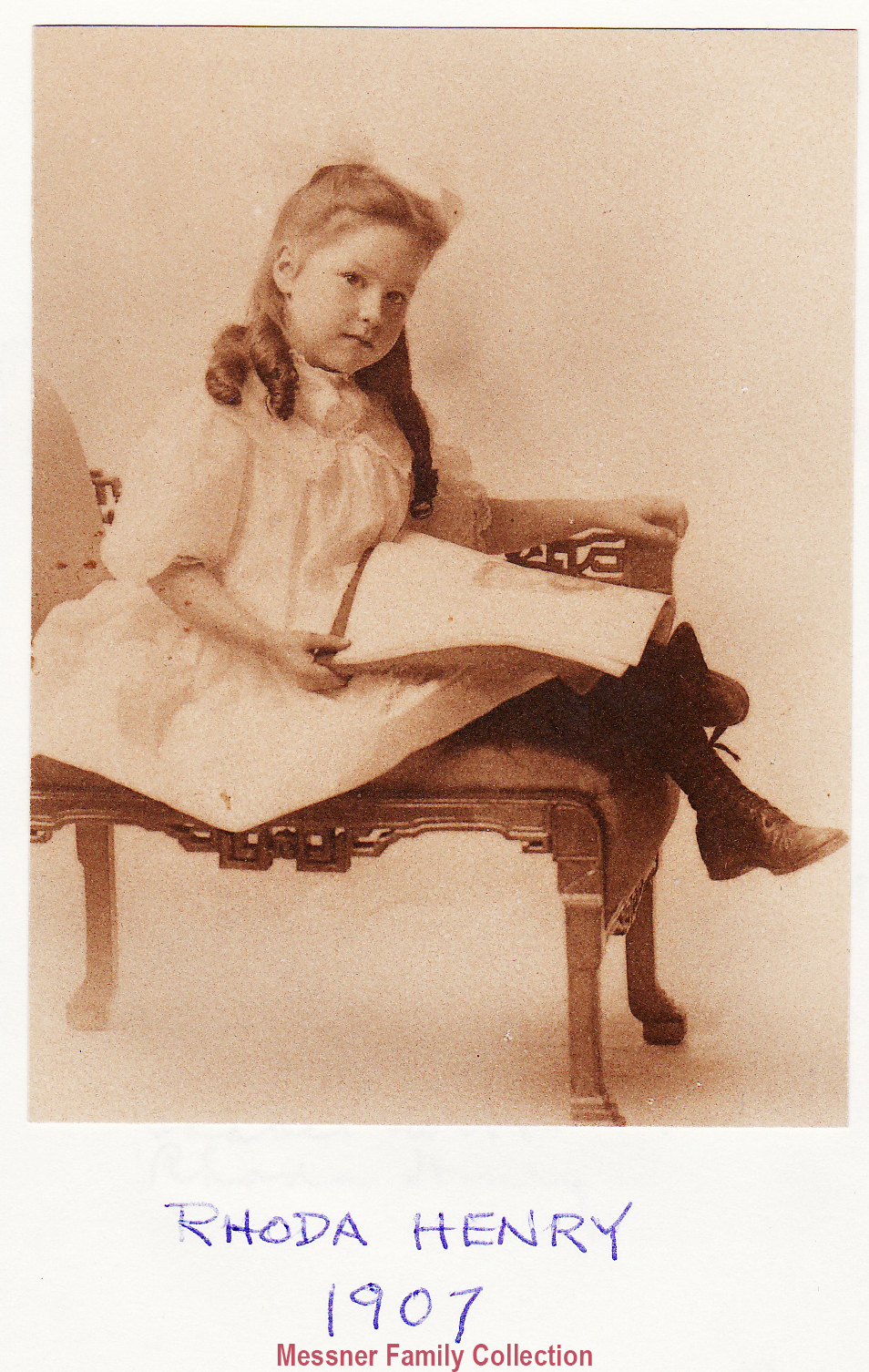
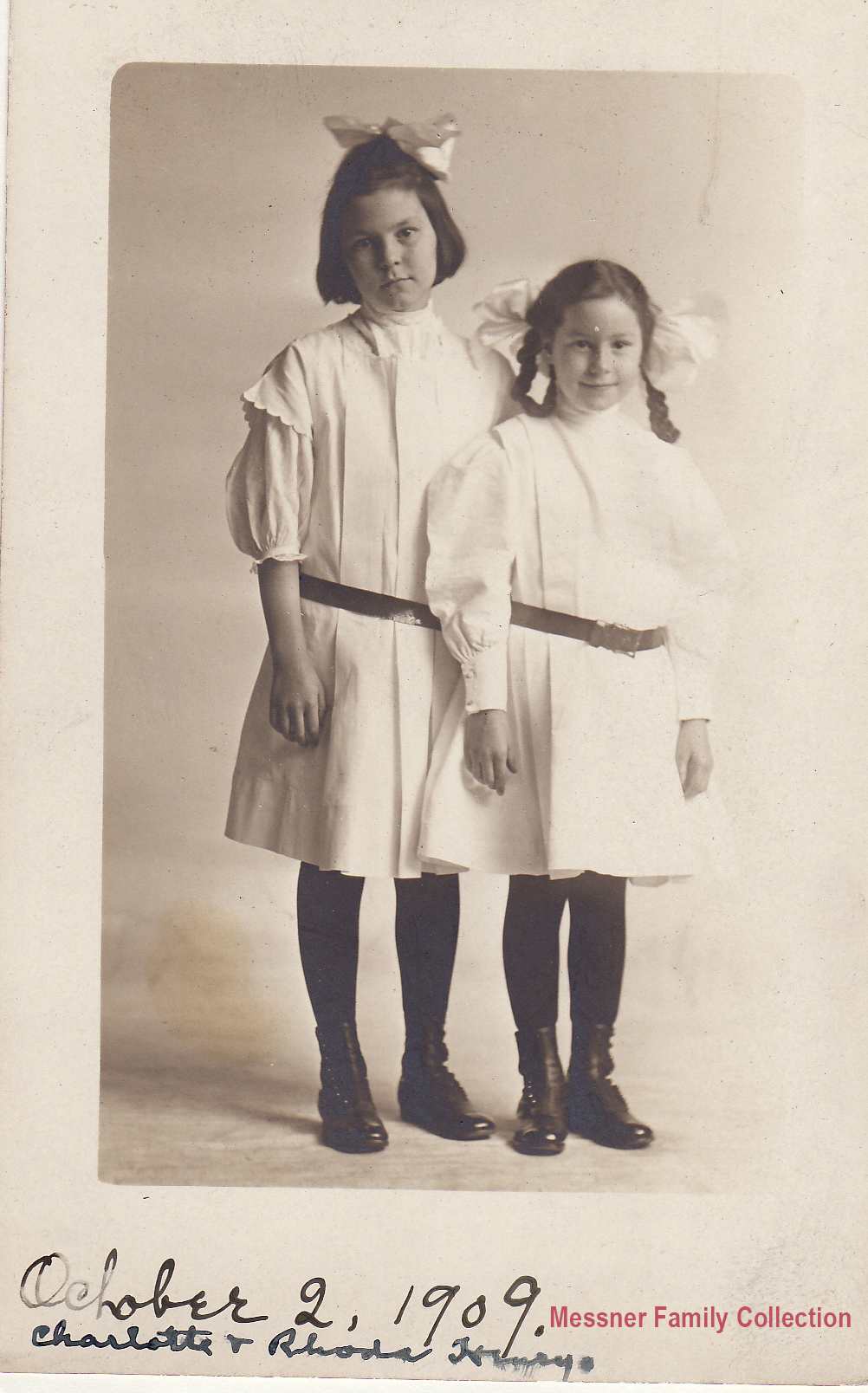
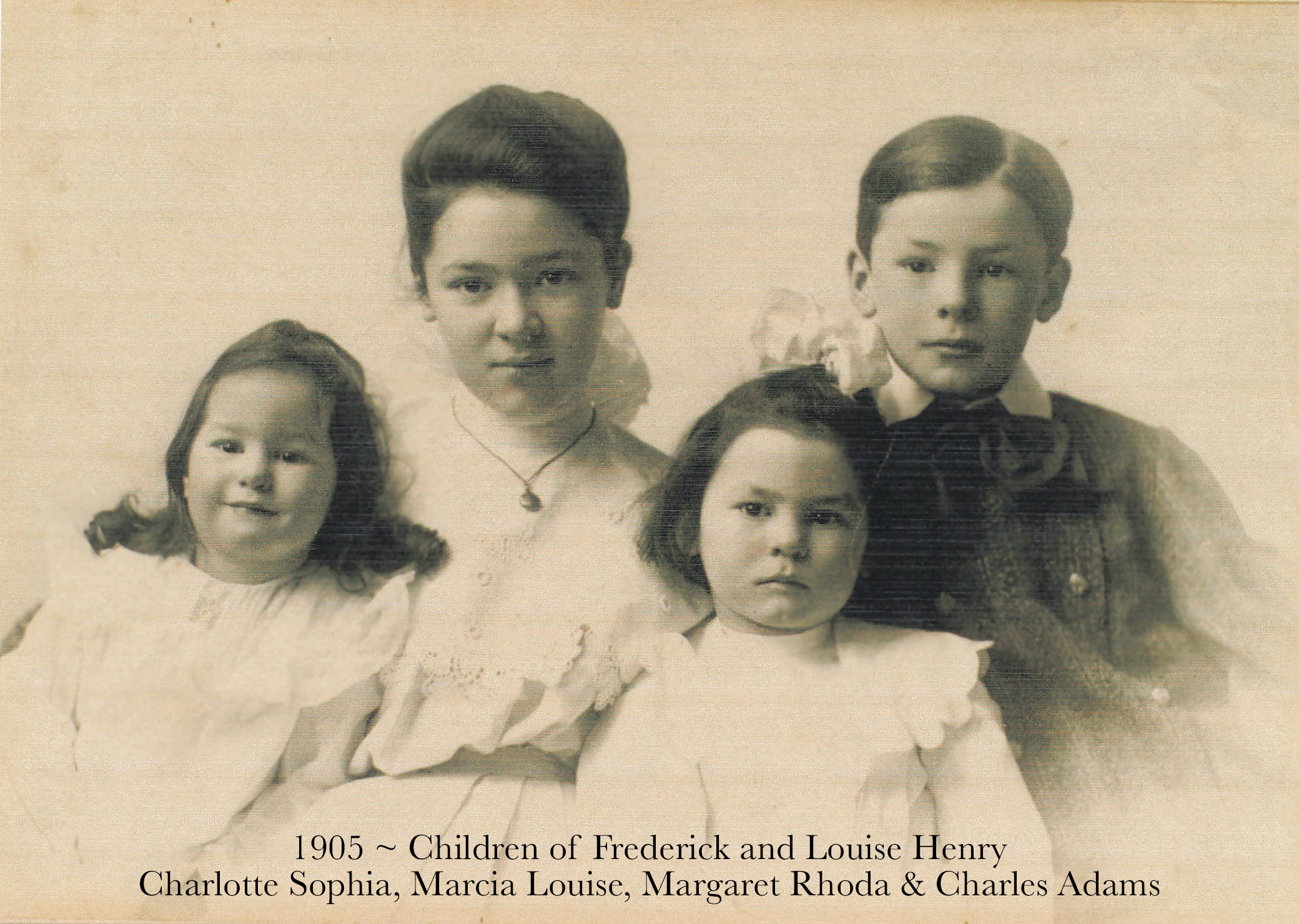
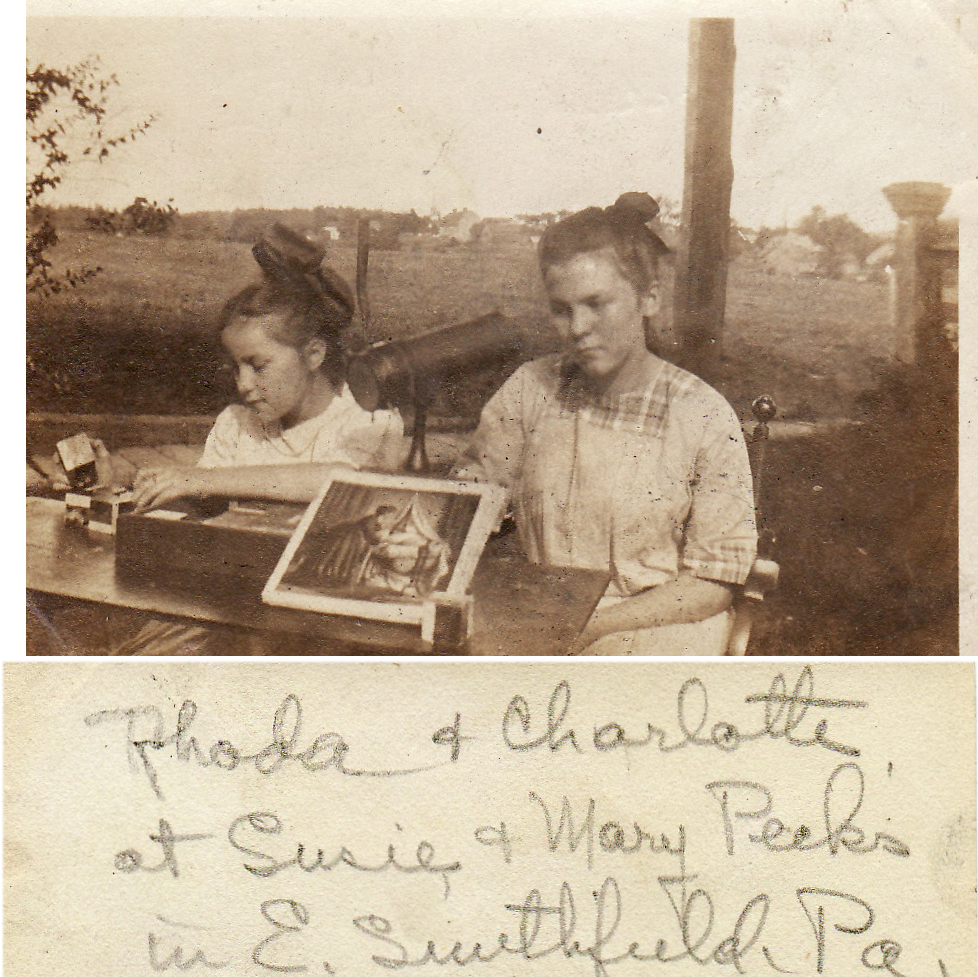
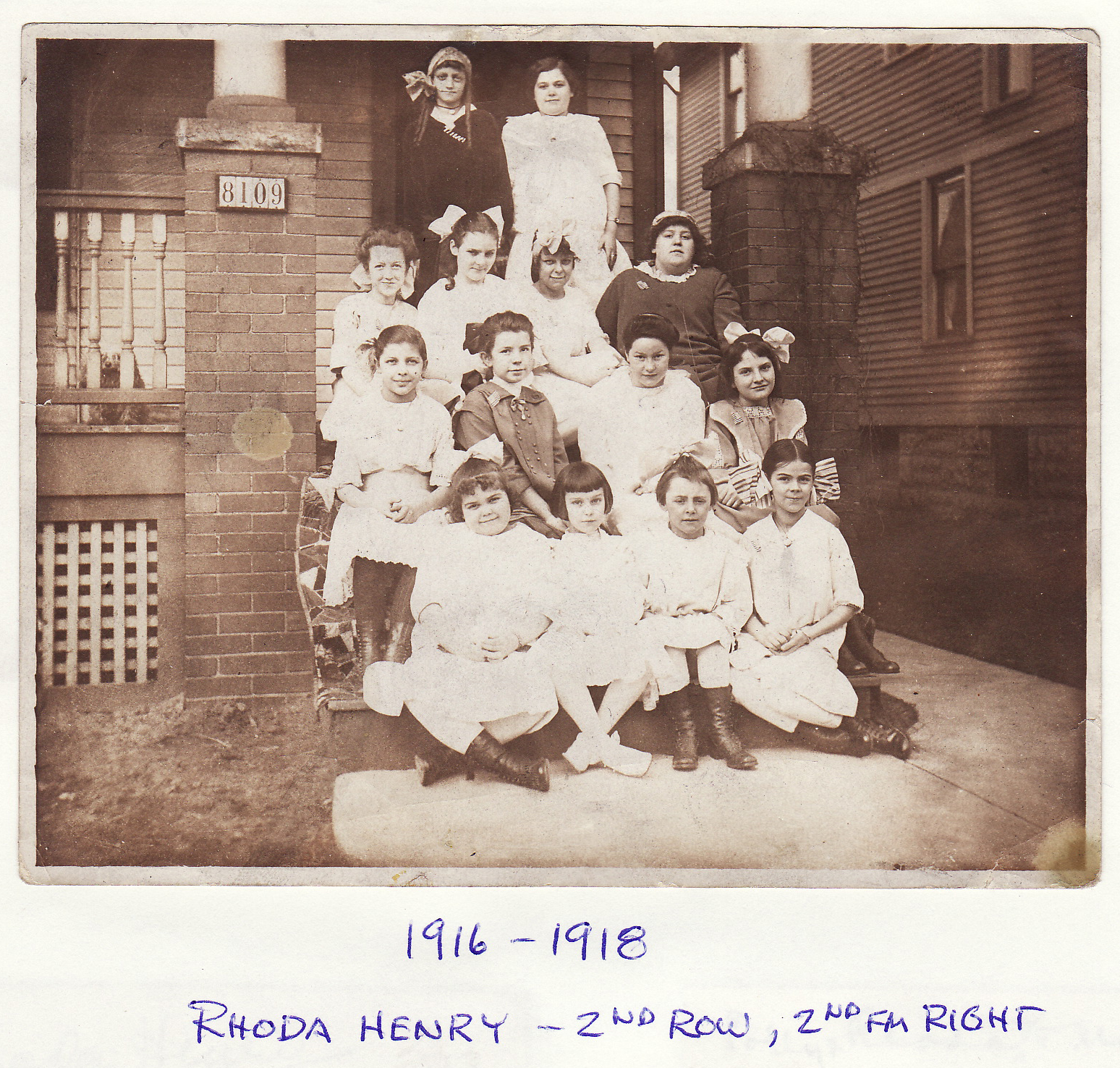
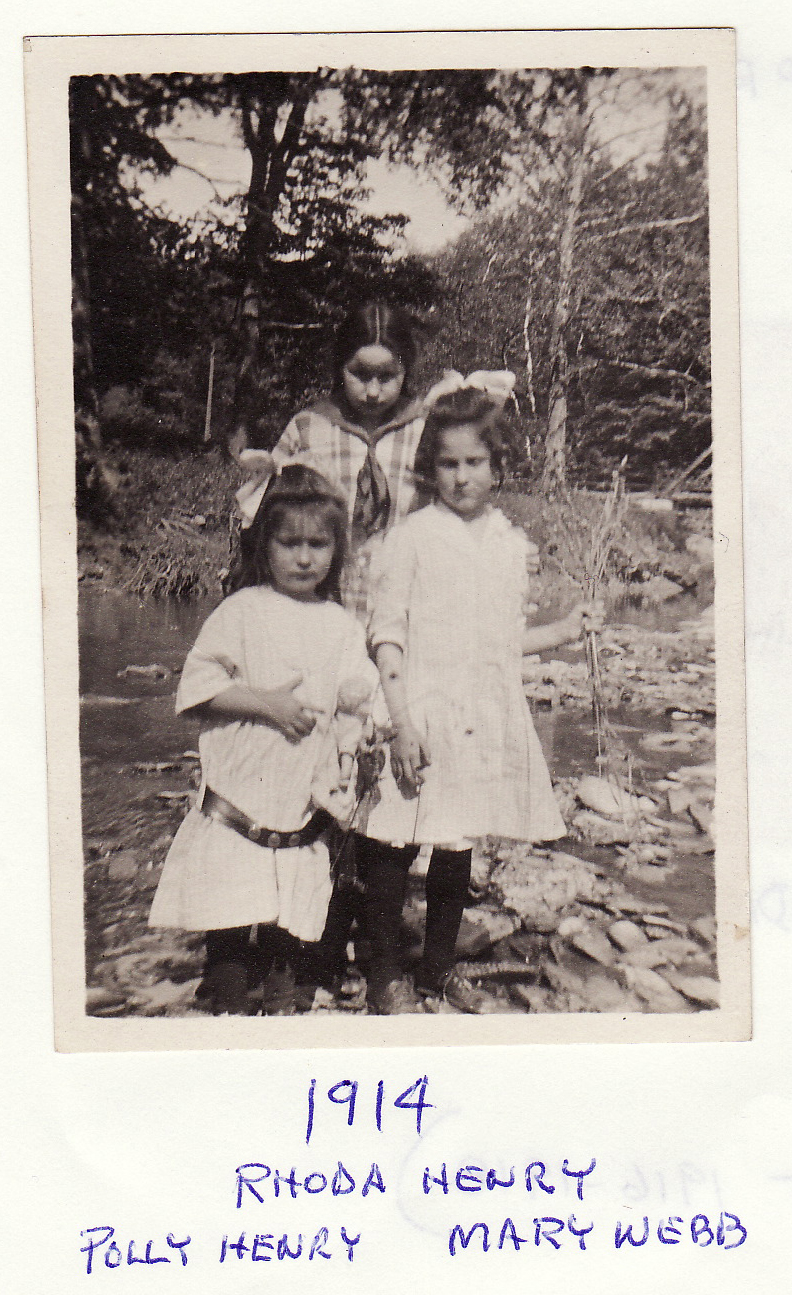
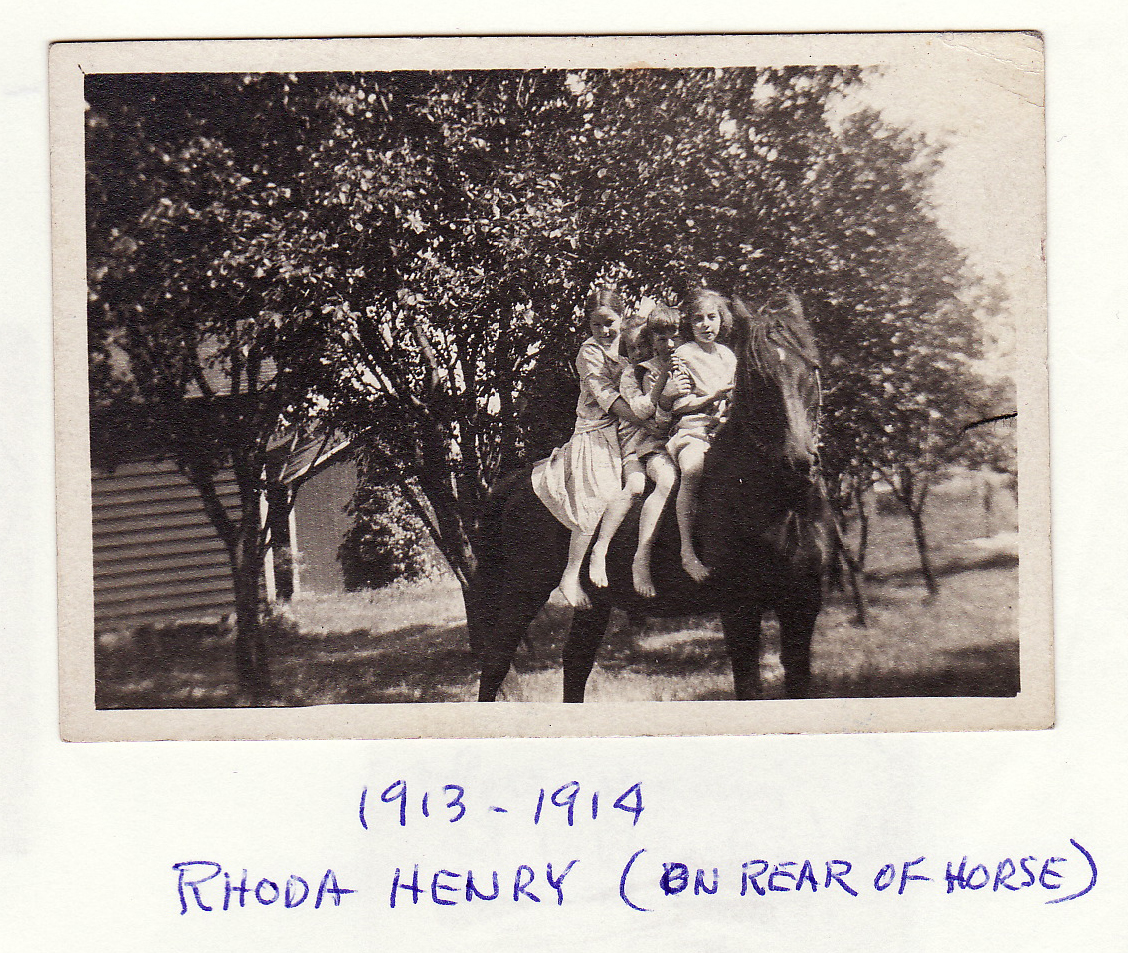
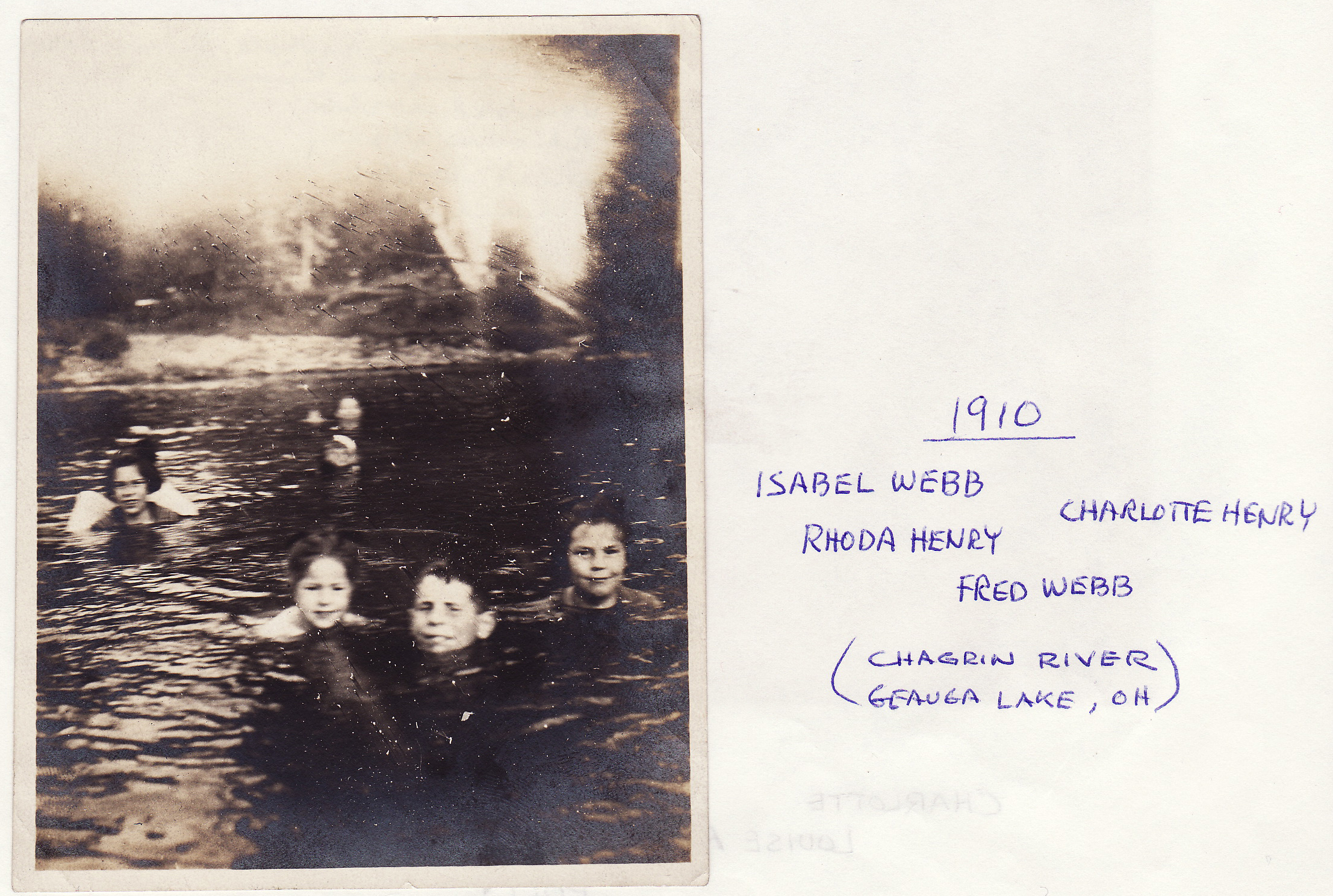
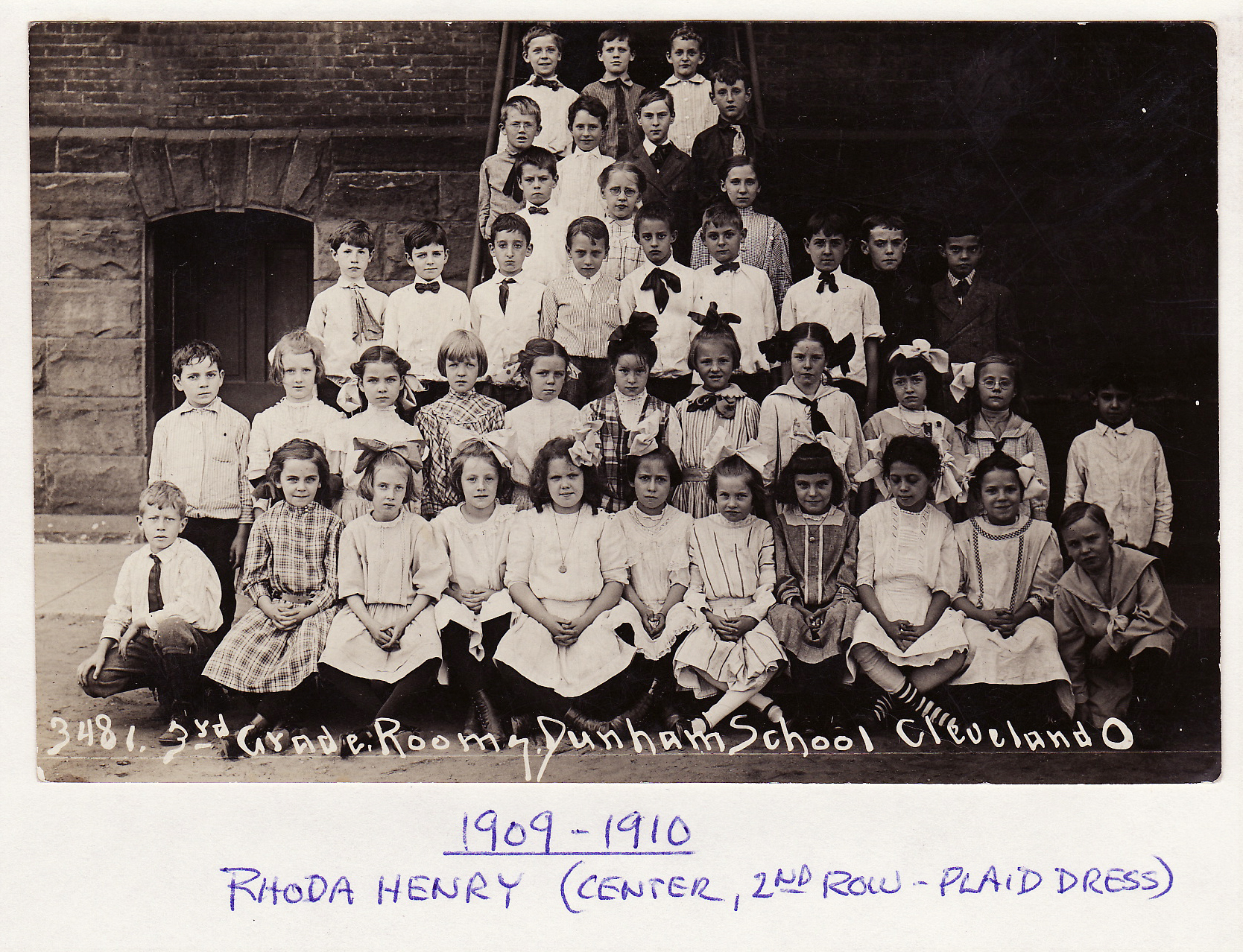
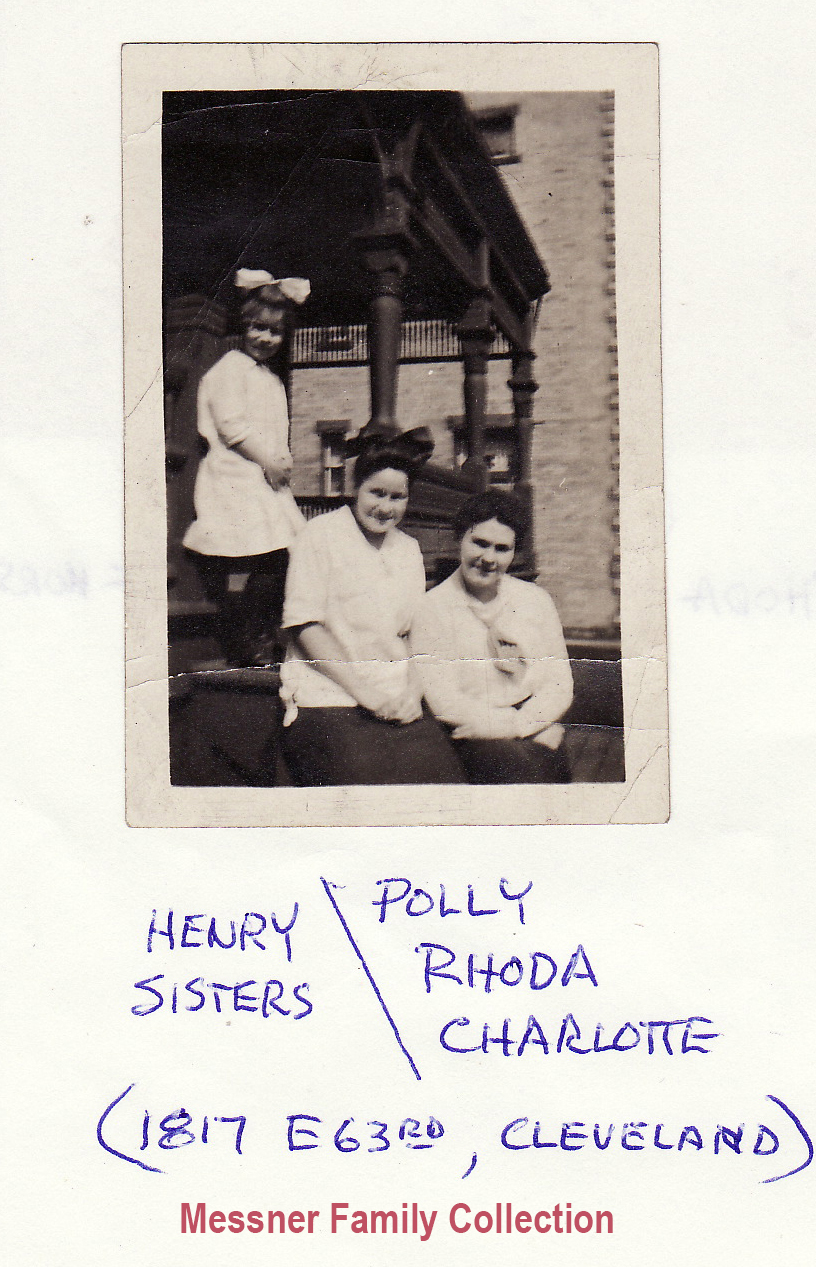
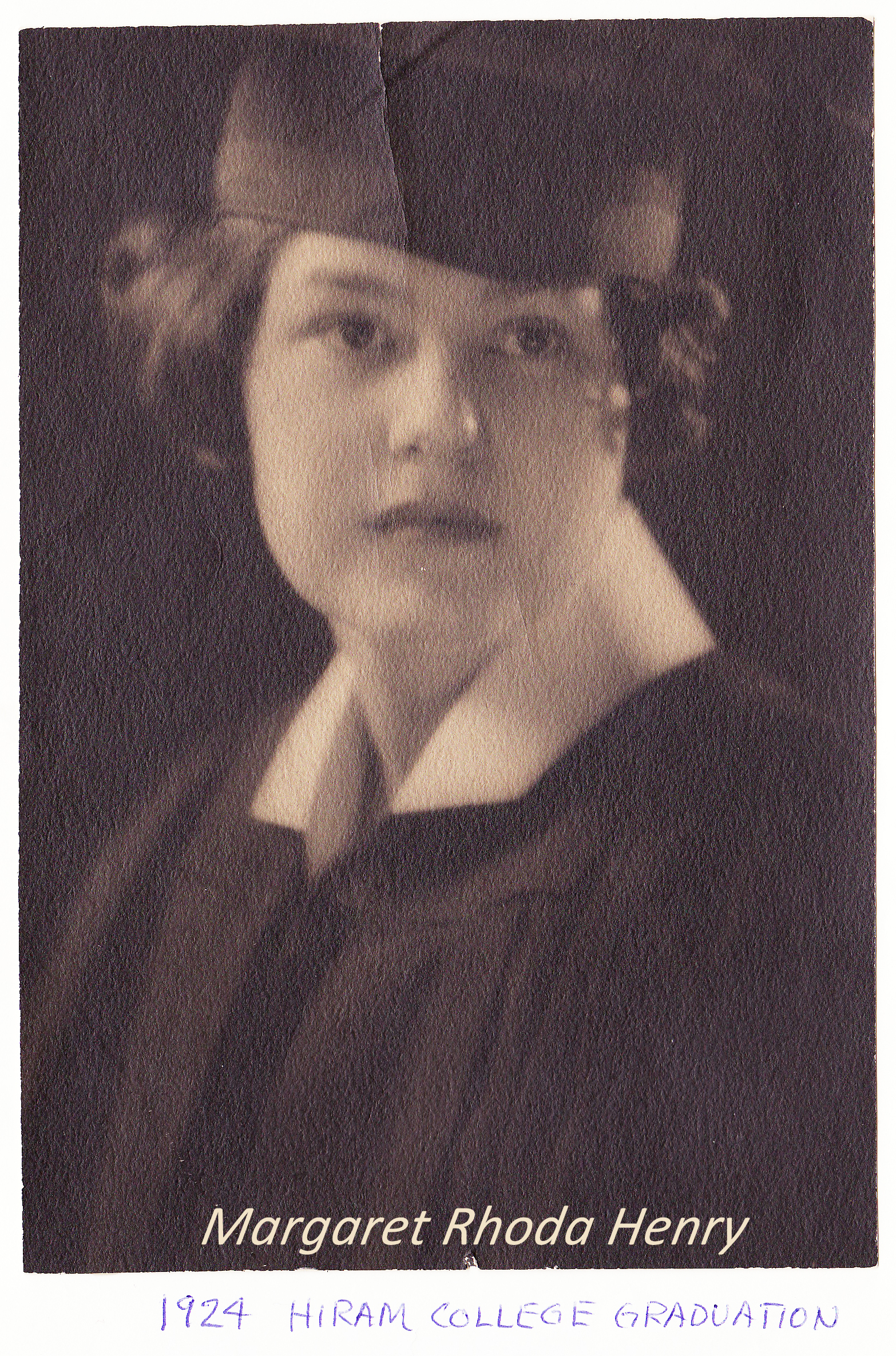
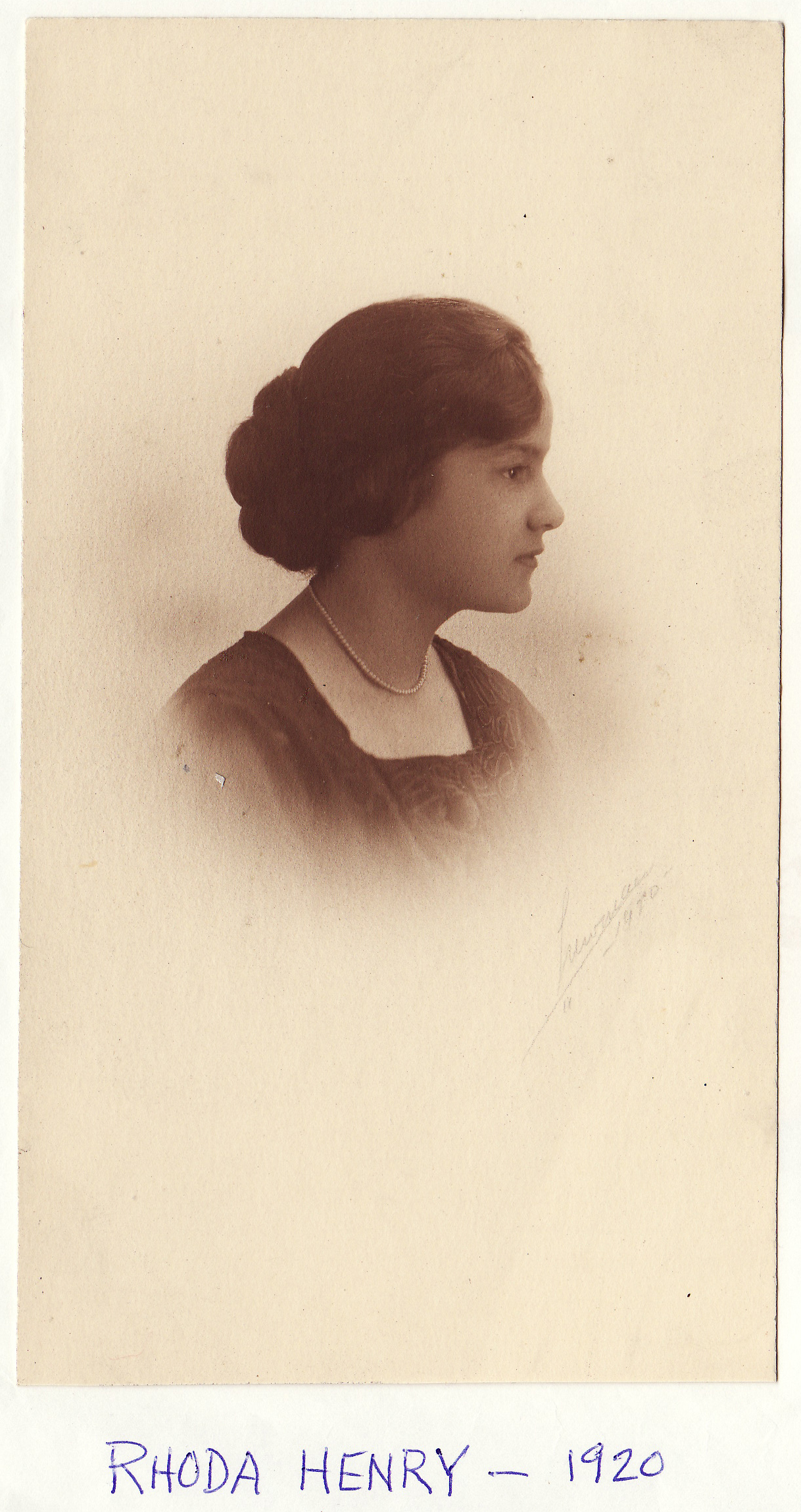
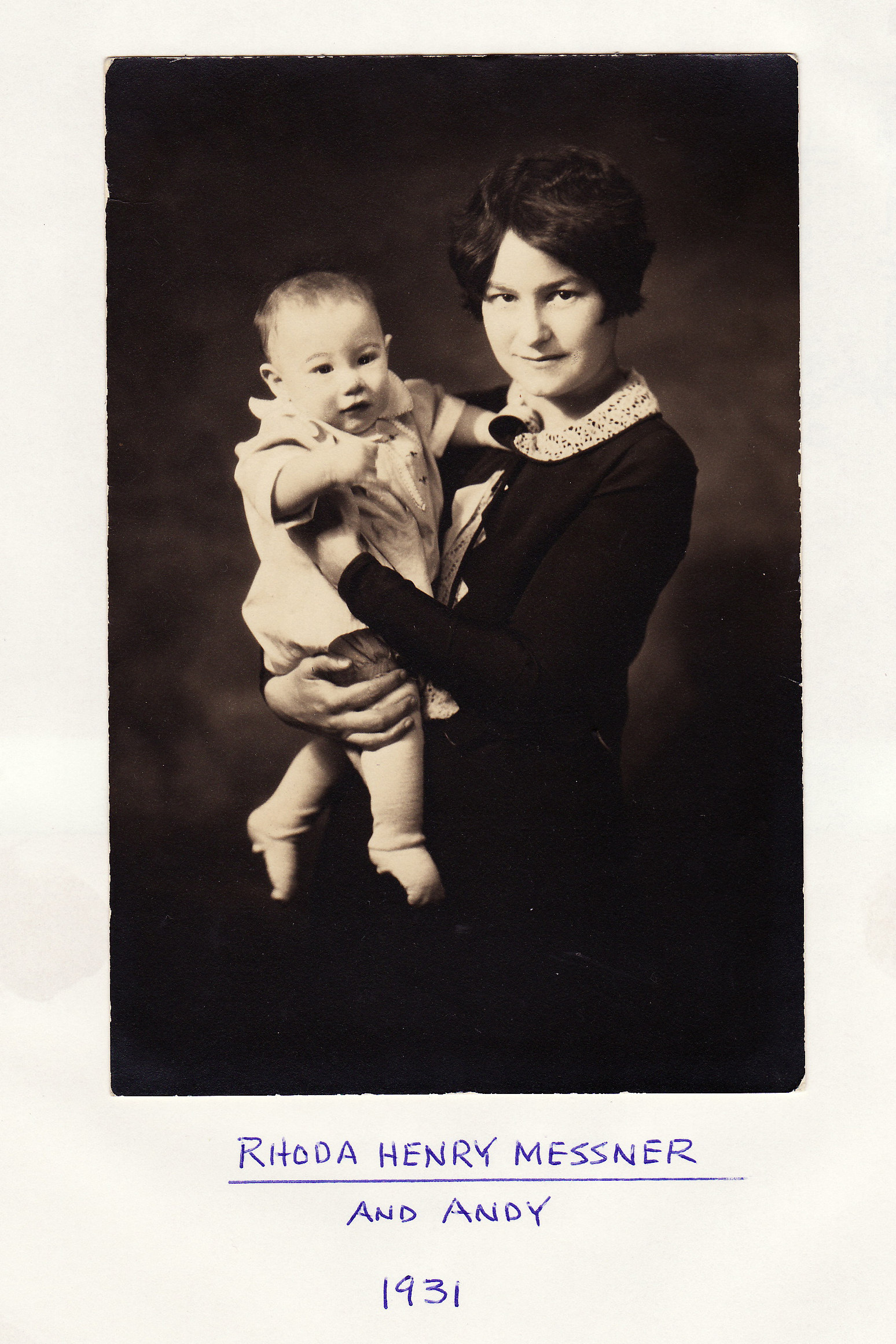
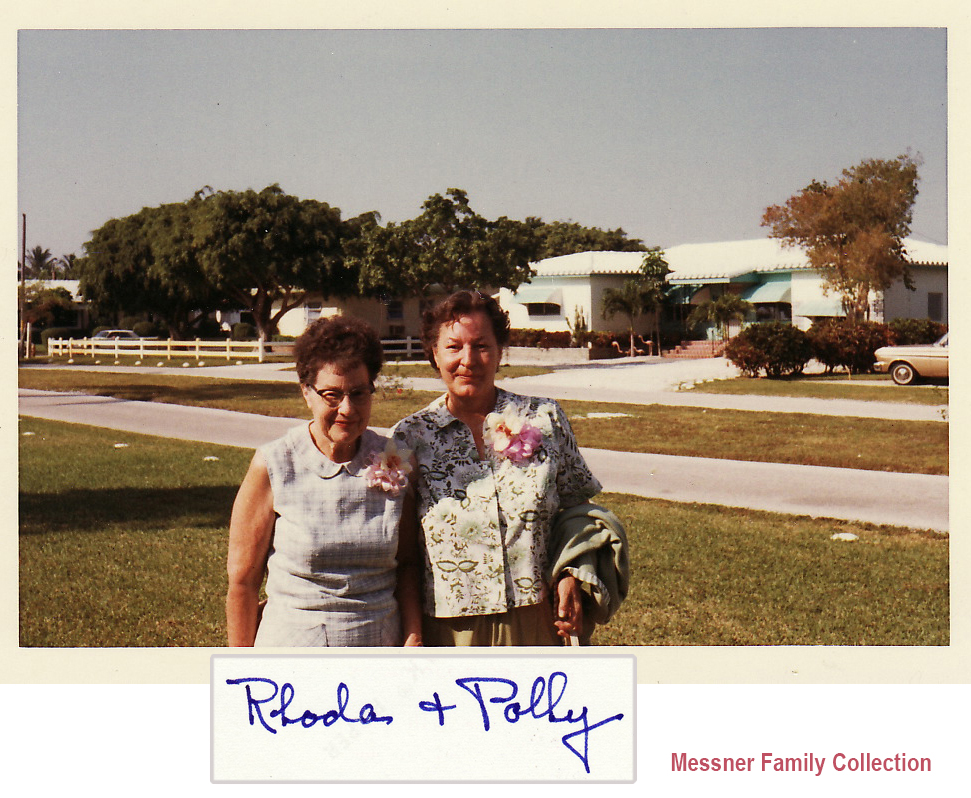
“Mimi’s Story – written about 1985 – An autobiographical sketch was given to us for the website by Andy Messner {Andy is the son of Vern and Rhoda Messner}
When I was a little girl, we lived in the country every summer from June to September. I always came home on the last day of school to find our house looking bare and our trunks already off to the railroad station. Hardly anybody had cars in those days, so we went places by train.
By the end of the day, we were settled into the house at Geauga Lake where my grandmother and grandfather (Sophia & Charles E. Henry) had once lived. Our trunks had travelled with us, but in the baggage car of the train. They had to be hauled down to the house in the “long wagon” which our old horse Dick just managed to pull, the way he moved, he must have been either very old or very lazy.
I don’t remember who unpacked the trunks and made up the beds for us to sleep in. I was the baby of the family with two older sisters, so I didn’t have too much work to do. Besides, I was busy chasing memories. I mean, I was busy remembering all the thing I did last summer.
First I pulled off my shoes and stockings, I wasn’t allowed to go barefoot in the city and it felt great. The rough grass outside prickled my feet, but the sandpile under the maple tree felt smooth and cool. I could have fun, just like last summer, making sand castles and roads with bridges and farms with stone fences all around them. Some of the sand had washed away during the winter so my big brother (Chuck) would have to bring up some more from the river. It was nice white sand there. We’d have to find a new swimming hole too. Our winding Chagrin river changed every year, making the swimming hole change too. One year, the new place had a high clay bank where we could slide down into the river. You hit the water with loud, splashing plops. It was hard on our bathing suits but lots of fun. Sometimes the older kids made a flat raft out of wood if the river was deep enough to float it.
While it was still light, I hurried back into the parlor. That was the roome where we sat in the evenings around the lamp. We had electric lights in the city but only kerosene lamps in the country. When the evenings got cool we’d have a fire in the big fireplace. The “what-not” was still in the corner where I remembered it. On the middle shelf was the Kaleidoscope with the wheel you turned to move colored glass pieces inside. They jerked, clinked and changed into one new pattern after another.
In the drawer of the “what’not” was the old stereoscope. I pulled it out with its stack of cardboard pictures. Each one had two pictures on it just alike, so when I put them into the stereoscope they looked real as if I could reach out and touch them. The man climbing a mountain seemed alive as he hung high above space; Niagara Falls was rushing right at me; and the Grand Canyon went down and down without any bottom to it. The best of all the treasures was the big pink seashell on the top shelf. When I put it against my ear, I could hear the waves of the ocean roaring far away.
In the bookcase at the end of the room were some of my favorite books that I read over and over every summer. It was like finding old friends again.
“Time to go after the milk” Mama called. That was my job every night and every morning. The road to the farmhouse was hard packed from wagon wheels & easy on my feet. In the farmyard, I found lots of smells I’d forgotten all about, like cows and hay and the strong smell of pigs. Wilking back, with the pail of warm milk bumping against my bare legs, I heard the locusts and katy-dids beginning to beat out their night-music. A gray mist was rising in the valley between our house and the railroad track a mile away and the big red ball of sun was slipping down out of sight.
In the house supper was on the table: mashed potatoes, dried beef gravy, applesauce and home-canned beans. Soon we’d have radishes and peas & tomatoes from our garden, planted for us early in the spring by the tenant farmer. “No jam”, Mama said to me regretfully. “If you can find wild strawberries up along the railroad tracks, we’ll make strawberry sunshine.”
By the time the dishes were done, the lamps had to be lit, and Mama said it was my bedtime. I couldn’t bear to go yet, with so many places to explore still. But she smiled and said “Tomorrow’s another day. You have the whole summer.”
As I was falling asleep, I heard an owl hooting outside and a whip-poor-will calling, and the last thing I remember was a train whistle wailing in the far off distance.
The summer days were long, filled with hot sunshine & only occasional rain. I loved the thunderstorms. When flashes of lightning cracked open the sky, I thought I caught glimpses of Heaven. Sweet corn was ripening now, and blackberries. All of us, even Papa, went out to pick berries with buckets on our arms, and hands protected from briars by black stocking mitts. Mama made jam and dozens, maybe hundreds, of blackberry pies.
But fall was in the air. Even my thoughts were turning city-ward.
Back in town the first of September, I roamed through the house turning on faucets and pressing light switches. Although the hard city water didn’t taste or smell as good as our country spring water, it was wonderful to have a tub with running water. City bathrooms were better all around than tin tubs and plumbing out back. And after a summer of oil lamps, electric lights seemed like white magic. It was good to roller skate on sidewalks again, go t to the library for books and see my neighbors and school friends. In fact it was good to get back to my whole city world again.
A-Time-To-Remember by Rhoda Henry Messner PDFMarch 8, 2017 Linda
Updated 24 days ago